


Germany is heading into a winter weekend that looks far more like January than November. While the country has enjoyed several days of sunshine, an abrupt arrival of Arctic air is now triggering a sharp temperature plunge, widespread frost and a renewed chance of snow. Forecasters expect conditions to remain bright but bitterly cold — and in some regions dangerously icy — for several days.
Where snowfall is most likely on Friday
The weather divide on Friday becomes strikingly clear across the country. Southern regions face dense clouds that bring snowfall from the southern Black Forest all the way to the Alps. In the southwest, precipitation alternates between rain and sleet as cold and slightly milder air masses clash. Northern Germany, by contrast, remains mostly bright with only isolated showers. Morning temperatures range from just below freezing in higher terrain to around five degrees in lowlands, accompanied by a light to moderate breeze that strengthens along the coasts and uplands.
Temperatures plunge as Arctic air settles in
According to meteorological assessments published by German media, Saturday brings a mix of sunshine and scattered clouds with few showers. Early in the morning, coastal areas may see values around minus two degrees. Higher mountain regions, especially the Black Forest, are expected to drop dramatically — in some spots down to minus 15 degrees. Daytime readings remain stuck below freezing across much of the country, except for the far north where temperatures may briefly reach three degrees.
The snow that fell earlier in the week will persist under these wintry conditions. The Black Forest, the Ore Mountains, the Harz region and the Thuringian Forest are among the areas where a thick white layer is set to remain.
Fresh snowfall expected in several regions
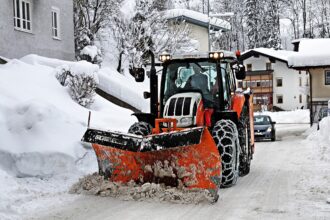
The wintry scenario does not end with the deep frost. Forecasts indicate that additional snowfall is likely in central and eastern highlands. Parts of Saxony and Thuringia could receive five to 15 centimetres of new snow, while the Black Forest may accumulate as much as 20 centimetres. These quantities are expected to stay on the ground through the weekend due to consistently freezing temperatures.
Sunday brings a shift – but not for the better
Night-time conditions from Saturday to Sunday show little change: widespread frost, clear skies and temperatures deeply below zero in elevated regions. By midday, however, the weather pattern becomes more unsettled. Cloud systems arriving from France bring fresh precipitation to large parts of the country. Regions near the North Sea, along with Rhineland-Palatinate, North Rhine-Westphalia, Hesse and Sauerland, may see a renewed phase of snowfall.
This is followed by a more complicated development. Milder air begins to advance from the west, interacting with the cold air already in place. As a result, many areas could experience a mix of snow, freezing rain and rain later in the day — a combination that significantly increases the likelihood of slippery roads and hazardous driving conditions.
A brief thaw before the next plunge
The new week initially brings a noticeable rise in temperatures, with daytime values climbing toward eight degrees in some regions. This milder phase, however, is short-lived. Forecasts suggest that another wave of cold northern air will move into Germany toward the end of November, restarting the cycle of frosty mornings and the early-winter weather pattern that has characterised recent days.
Meteorologists describe the situation as a weather “rollercoaster” driven by recurring surges of polar air. For now, Germany must prepare for several days of intense cold — and the possibility of yet more snow.